
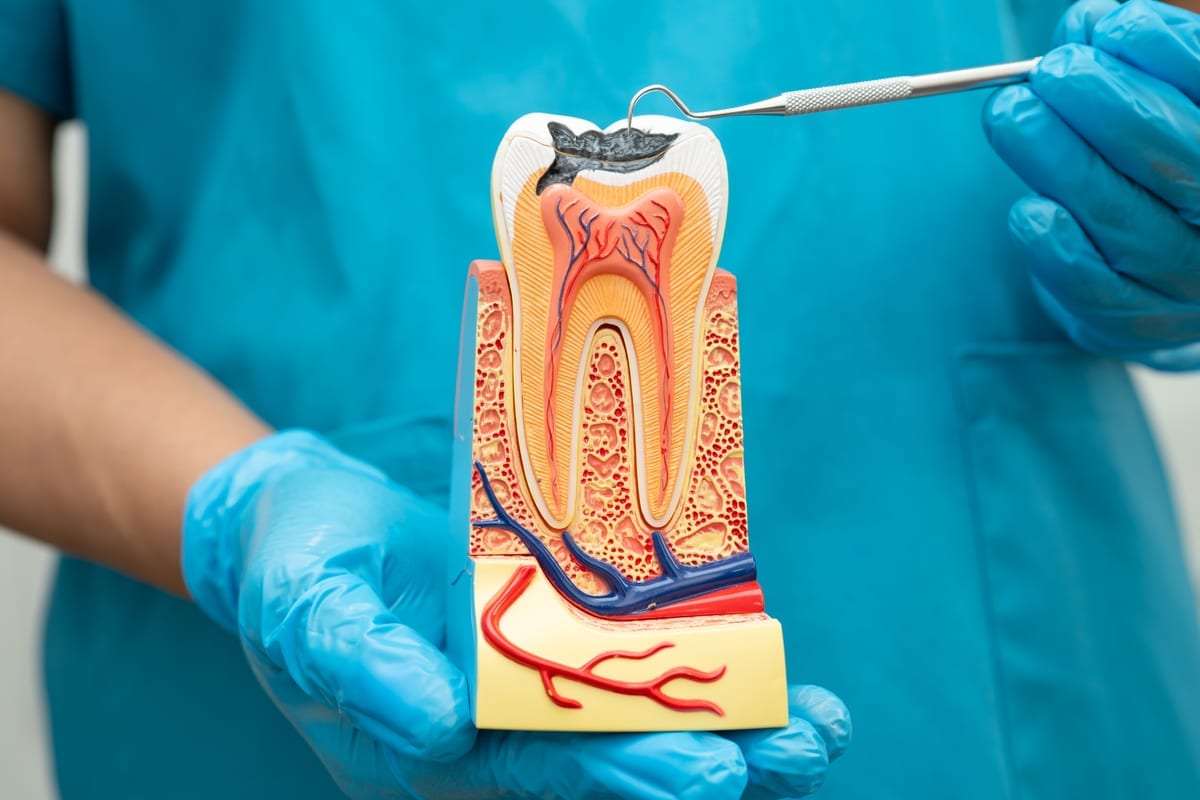
Many patients in Tomball are surprised to hear their root canal isn't finished yet. The root canal removes infection and seals the tooth. But that treated tooth still needs protection. Understanding why your root canal isn't complete without a crown in Tomball helps you make smart decisions for your long-term dental health.
At Northampton Dental, Dr. Nori Kamaya takes time to walk every patient through each step of treatment. This article explains why a crown is essential after a root canal, what happens if you skip it, and what to expect at your crown appointment.
A root canal cleans out the infected pulp inside your tooth. It removes bacteria, shapes the canals, and seals everything closed. However, this process leaves the tooth structurally weakened.
The tooth loses its internal support after the pulp is removed. It becomes brittle over time. Without a crown, everyday chewing forces can cause it to crack or fracture.
Back teeth handle significant biting pressure daily. Molars and premolars are especially at risk. A fractured tooth after a root canal often cannot be saved and may require extraction.
This is why Dr. Kamaya almost always recommends a dental crown to follow every root canal. The crown acts like a helmet. It covers the entire visible portion of the tooth and absorbs bite forces evenly.
Some patients feel fine immediately after a root canal. They assume the job is done. Unfortunately, skipping the crown creates serious risks down the road.
Here is what can happen without a dental crown after root canal treatment:
Skipping the crown is a short-term saving with a long-term cost. Protecting that investment with a crown is almost always the smarter path.
Many patients feel anxious about getting a crown. Knowing what to expect makes the experience much more manageable. Dr. Kamaya and the team at Northampton Dental make patient comfort a top priority.
Here is a step-by-step look at the crown placement process:
Most patients find the crown appointment straightforward. Sedation Dentistry options are available for those who feel anxious. Dr. Kamaya discusses all comfort options during your consultation.
A well-placed dental crown can last 10 to 15 years or longer. Longevity depends on your oral hygiene habits, bite forces, and how well you care for the restoration.
Crowns placed over root canal-treated teeth function just like natural teeth. You can eat normally and smile confidently. Most patients forget the crown is even there after a short adjustment period.
Caring for your crown is simple. Brush twice daily and floss around the crown margin each day. Avoid chewing on ice or very hard foods, which can chip any restoration over time.
Regular checkups at Northampton Dental allow Dr. Kamaya to monitor your crown and the underlying tooth. Catching small issues early prevents larger problems later. Consistent care keeps your smile strong for years to come.
A crown after a root canal is an important step. But it can also be an opportunity to think about your broader smile health. Dr. Kamaya takes a whole-mouth approach to care.
Some patients use this time to explore other restorative or cosmetic options. For example, if you have small chips or staining on adjacent teeth, Composite Fillings Tomball can restore those teeth beautifully alongside your new crown. Coordinating treatments creates a more uniform, natural-looking result.
Others want to evaluate their overall alignment after completing restorative care. Straightening crowded teeth after restorations are in place is easier to plan. An Invisalign Lpno Assessment Tomball can help determine whether clear aligner treatment fits your goals.
Dr. Kamaya works with every patient to build a personalized plan. There is no pressure and no one-size-fits-all approach. Your comfort and confidence guide every recommendation.
Completing your root canal treatment with a dental crown is one of the most important steps you can take for your oral health. A crown protects your investment, restores function, and prevents future tooth loss. Dr. Nori Kamaya and the team at Northampton Dental are here to guide you through every step with warmth and expertise. Book Now to schedule your appointment with our team.
Most dentists recommend placing a crown within a few weeks of completing your root canal. The temporary filling used after the procedure is not designed for long-term protection. Waiting too long increases the risk of fracture or bacterial recontamination. Dr. Kamaya will advise you on the ideal timeline based on your specific tooth and healing progress.
The crown procedure is typically very comfortable. Local anesthetic is used during tooth preparation, so you should feel little to no discomfort. Some mild sensitivity around the gums is normal after the appointment. This usually resolves within a few days.
You can eat with a temporary crown in place, but some caution is recommended. Avoid sticky foods like caramel or gum, which can pull the temporary off. Also avoid very hard foods that could crack it. Chewing on the opposite side of your mouth when possible helps protect the temporary crown.
Dr. Kamaya typically recommends tooth-colored porcelain or ceramic crowns for a natural appearance. For back teeth that endure heavy chewing forces, stronger materials like porcelain-fused-to-metal may be recommended. The best material depends on the location of the tooth, your bite, and your aesthetic goals. This will be discussed during your consultation.
It is true for most teeth, especially molars and premolars. Front teeth may occasionally be exceptions because they experience less biting pressure. However, Dr. Kamaya evaluates each case individually. Even front teeth treated with a root canal often benefit from crown protection to prevent long-term fracturing or discoloration.